The Hidden Conveniences of Memory Take Care Of Household Caregivers
Business Name: Beehive Homes of Sandy
Address: 9532 S 700 E, Sandy, UT 84070
Phone: (801) 975-5244
Beehive Homes of Sandy
BeeHive Homes of Sandy provides personalized assisted living and memory care in a comfortable residential setting. Our compassionate caregivers deliver attentive daily support focused on dignity, independence, comfort, and quality of life.
9532 S 700 E, Sandy, UT 84070
Business Hours
When households initially start checking out memory care, the discussion usually begins with the individual that requires aid. That makes good sense. A partner has actually started straying during the night. A parent repeats the same concern fifteen times prior to lunch. Somebody that as soon as handled every bill and appointment currently obtains perplexed by the mail or misses meals. The focus lands on safety, framework, and the psychological toll of dementia or Alzheimer's disease.
What usually obtains ignored is how much memory care adjustments life for the family caregiver.
Not in a significant, overnight method. Not with a neat feeling of relief that addresses whatever. However in the quieter, a lot more sensible manner ins which matter most, memory care can recover rest, minimize consistent fear, offer partnerships room to breathe once again, and help a child, kid, or spouse get out of the duty of exhausted situation supervisor. For lots of households, that change is the covert benefit they did not recognize to expect.
The caregiving concern no person sees clearly at first
Family caregiving typically starts with great intents and a few additional tasks. One person manages medications, an additional assisted living near me makes certain meals are consumed, and someone else checks that the range was shut off. Early, these obligations can feel convenient, even ethical. Families inform themselves they are just being helpful.
Then the hours start accumulating. The phone rings more often. Appointments increase. The very same problems return every day, and the caregiver begins residing in a state of irreversible awareness. That performance is draining because it never ever totally quits. Even throughout dinner, or while sitting at the office, the mind keeps circling back to concerns like, Did Mom take her pills, Is Dad secure at home, What if she roams again, Did I miss a sign that things are obtaining worse?
That continuous psychological tons is just one of the hardest parts of elder care. It is not simply physical work, although the manual labor can be hefty also. It is the psychological stress of always anticipating the following issue. Memory care can disrupt that cycle by putting qualified personnel, structured routines, and a safe atmosphere in place. That does not eliminate grief, but it does lower the number of small emergencies that put on caretakers down.
For numerous families searching for memory care near me, the decision begins as a safety search. What they often uncover is that they are likewise searching for a method to survive caregiving without losing themselves.
Sleep returns, which adjustments greater than energy
One of one of the most immediate advantages family members caretakers notification after a move to memory care is sleep. It appears straightforward, nearly also basic, however rest deprival shapes every little thing. It influences perseverance, concentration, high blood pressure, state of mind, and decision-making. A caretaker that has invested months awakening to examine a parent, listening for footprints, or awaiting the next telephone call from a next-door neighbor or healthcare facility is operating fumes.
In a great memory care setting, over night supervision and foreseeable regimens suggest less sleepless evenings for the family. A partner no longer needs to sleep with one ear open. An adult youngster does not have to brace for a middle-of-the-night dilemma. That can really feel almost elegant initially, but truly it is restoration. With enough remainder, people become kinder, steadier, and much much better outfitted to make thoughtful decisions.
I have seen households undervalue how much rest loss affects their connection with the individual receiving care. A worn out caregiver is more likely to snap, suggest, or cry in the vehicle after a visit. Once sleep enhances, visits commonly come to be gentler. Households have extra psychological transmission capacity to laugh, reminisce, or just rest together without bracing for conflict.
Memory care can maintain the relationship that health problem has been eroding
Dementia modifications family members duties in agonizing methods. A little girl becomes a supervisor. A spouse ends up being a screen. A kid ends up being the one that clarifies, redirects, and repeats. Gradually, the psychological partnership can get hidden under logistics. Numerous caregivers regret that loss long prior to the individual they enjoy is literally gone.
Memory care can offer a few of that partnership back.
When qualified staff take on the routine jobs of drug management, dish support, cueing, showering support, and redirection, the member of the family is no more the primary supervisor every time they walk through the door. That change issues. A visit can become a visit again. Rather than spending the entire hour dealing with troubles, the caretaker may spend fifteen minutes speaking about old photographs, paying attention to music, or walking in a garden.
That small change has genuine psychological consequences. It allows affection to appear more naturally. It gives the individual with memory loss an opportunity to experience their loved one in a calmer, less irritated state. In some households, the conversations improve once the daily stress eases. An other half who made use of to fear each meal due to the fact that her spouse would accuse her of hiding his wallet may find that in a memory care atmosphere, they can delight in each other once again for moments at a time.
That is not a treatment. It is something subtler and, for numerous households, even more achievable. It is the possibility to maintain dignity in the connection when the illness has transformed nearly every little thing else.
Professional support minimizes the psychological guesswork
Family caregivers often become amateur experts in signs and symptoms they never ever asked to find out about. Is this anxiety? Is it sundowning? Is the complication from dehydration, a medication negative effects, or the progression of the disease? Is the refusal to wash about humiliation, pain, concern, or just the wrong time of day?
That amount of guesswork is exhausting. It can likewise lead to second-guessing every option. Caretakers question whether they are being too stringent or too lax, also cautious or not careful sufficient. And when nobody around them totally understands what they are seeing, the isolation obtains worse.
Memory care personnel bring another layer of observation and experience. They see patterns throughout lots of locals and know that habits generally has a cause, also if it is not obvious at first. They know that illumination, sound, hunger, exhaustion, and overstimulation can all impact behavior. They recognize that rerouting someone with dementia usually works better than saying. They comprehend exactly how to sign an individual with a job as opposed to taking over also quickly.
That professional assistance takes stress off families in an extremely specific way. It replaces uncertainty with common duty. A daughter no more has to feel that every hard moment is evidence she is stopping working. She can ask concerns, find out the care team's monitorings, and choose from a much more based place.
This is one factor lots of people exploring senior care are stunned by the emotional alleviation they really feel after satisfying a knowledgeable memory care team. They are not simply considering a building. They are imagining what it would certainly indicate to stop bring the entire circumstance alone.
Respite care becomes part of the strategy, not a guilty afterthought
Families typically wait also lengthy to use respite care because they believe a break suggests they are surrendering, or since they stress no one else can do things "right." That unwillingness is easy to understand, yet it can be expensive. Fatigue has a method of sneaking up on people. By the time a caregiver admits they need a break, they are often currently depleted.
Memory care can operate as a longer-term type of respite care for family members whose loved one requires more guidance than the home can safely supply. Even when the action is permanent, one of the covert benefits is that caretakers can ultimately schedule their own visits, take a weekend break away, visit grandchildren, or sleep with the evening without an emergency situation plan taped to the fridge.
There is also an emotional benefit in recognizing that care continues when the household steps back. That knowledge makes it possible to be existing in various other areas of life once again. A caregiver can return to work with less interruptions. A spouse can most likely to physical treatment or just sit at a close friend's kitchen area table without feeling guilty every minute.
Families in some cases are afraid that time away will make them less involved or much less caring. In method, the reverse is often real. A rested caretaker turns up with even more patience and even more heat. The visits end up being much more human again.
The home setting is no more the only area where safety lives
Many caretakers attempt to adapt the home to the demands of somebody with dementia. They secure cupboards, install alarms, label drawers, hide auto tricks, and maintain a close eye on medication. These actions can aid, but they can also create a house that feels extra like a nerve center than a home. The caretaker ends up being the one constant safety system, and that duty can feel impossible to sustain.
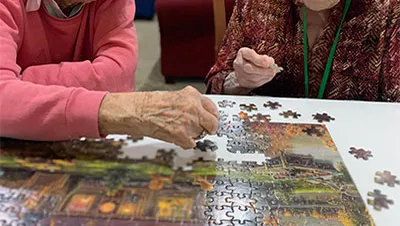
A well-run memory care neighborhood is made around these needs from the start. Secure departures, enclosed walking courses, aesthetic cues, streamlined formats, and personnel trained in dementia care all decrease the number of day-to-day hazards. For family members caregivers, that shift can be a real relief. They no more have to scan every space the minute they get here. They can focus on the individual, not simply the risks.
That matters because safety is not only concerning protecting against the worst-case circumstance. It has to do with alleviating the background tension that never fairly leaves the caretaker's body. When the setting supports the person with amnesia, the family member can quit acting like a sentry every waking hour.
Guilt might not go away, however it comes to be simpler to carry
Few feelings are as tangled in elder care as guilt. Guilt for refraining from doing sufficient. Shame for desiring assistance. Regret for working excessive. Shame for feeling alleviated when somebody else takes control of. Guilt for wanting points were different.
Memory care does not get rid of shame. Any straightforward caretaker who claims it does is probably not informing the full story. But it can make sense of guilt less complicated to place in context.
Once family members see that the transfer to memory care is improving every day life, regret usually sheds several of its pressure. They see that the individual they love is eating more regularly, communicating with others, or no more frightened by being alone in your home. They see that experienced team know exactly how to take care of tough habits with much less problem. They begin to comprehend that love is not gauged by physical distance alone.
This change is specifically crucial for partners and adult kids that have spent months or years pushing themselves past their restrictions. Releasing the fantasy that they should do everything themselves is not failing. It is frequently the first absolutely lasting decision they make.
When households begin searching for senior living near me, they may believe they are choosing in between love and usefulness. In reality, a great memory care setting can sustain both.
Small social minutes can be a gift to everyone involved
People with dementia usually respond to structure and companionship in manner ins which are simple to overlook. A common meal, an acquainted song, a group activity, or a steady morning regimen can reduce anxiety and produce moments of involvement that are hard to recreate at home. For caregivers, knowing that their loved one is not spending the day separated can ease a specific sort of fear that is simple to underestimate.
Isolation weighs heavily on caregivers also. Lots of member of the family gradually withdraw from good friends due to the fact that they are also worn out to explain the situation again, or due to the fact that leaving your house feels impossible. That loneliness compounds anxiety. Memory care can disrupt the isolation for both sides. The resident obtains communication, and the caretaker obtains a little space to re-enter their very own social life.
Sometimes the advantage is as common as this: the caregiver can most likely to lunch with a friend and speak about something apart from drugs, straying, or medical professional visits. That flexibility matters. Individuals need greater than the identification of caregiver to stay well.
Knowing when memory care is the appropriate sort of help
Every family reaches this decision in a different way. Some involve it after an autumn. Others after repeated hospital visits, wandering episodes, or an increase in aggression and complication. Some get here slowly, after months of attempting in-home support, grown-up day programs, and turning household schedules. There is no ideal timeline.
What usually makes the difference is not a solitary negative day, however a pattern. If caregiving has become a permanent dilemma response, if safety is deteriorating, if the caretaker is shedding rest, slimming down, or losing the capacity to function at the office or with kids of their very own, it might be time to look more seriously at memory care.
A thoughtful search for memory care near me must consist of greater than room size or décor. Ask how team take care of behavior changes. Inquire about supervision overnight. Ask how households stay involved. Ask exactly how the area supports transitions, due to the fact that the very first weeks matter a great deal. Watch just how team speak to citizens when things are tranquil and when they are not. The tone informs you a lot.
The right location will not just satisfy the demands of the resident. It will likewise lower the temperature level of domesticity. That is the surprise pledge several caregivers are really looking for.
What families frequently discover months later
After the initial relocation, the changes can be subtle initially. The caregiver might realize they have actually stopped inspecting the clock every 10 mins. They may see they no more tighten at the sound of the phone. They may laugh more quickly throughout visits. They may rest far better, make fewer errors at the office, or really feel less resentful during family conversations.
Months later on, some describe the experience in remarkably psychological terms. They say they can be a child once again, not simply a coordinator. They say they can sit next to their spouse without regularly correcting him. They state the visits really feel softer. The sorrow is still there, yet it is no more crowding out every little thing else.
That may be one of the most essential surprise benefit of memory look after family members caregivers. It gives them room to remain human. It relieves the consistent pressure of holding every piece together by themselves. It makes space for rest, for existence, and for the type of love that is feasible when fear is no longer running the show.
For families browsing memory care, the decision is rarely simple. However, for several caretakers, it comes to be the moment when they finally quit surviving on adrenaline and start living in a way that is healthier, steadier, and extra sustainable for every person involved.
Beehive Homes of Sandy provides assisted living care
Beehive Homes of Sandy provides memory care services
Beehive Homes of Sandy provides respite care services
Beehive Homes of Sandy supports assistance with bathing and grooming
Beehive Homes of Sandy offers private bedrooms with private bathrooms
Beehive Homes of Sandy provides medication monitoring and documentation
Beehive Homes of Sandy serves dietitian-approved meals
Beehive Homes of Sandy provides housekeeping services
Beehive Homes of Sandy provides laundry services
Beehive Homes of Sandy offers community dining and social engagement activities
Beehive Homes of Sandy features life enrichment activities
Beehive Homes of Sandy supports personal care assistance during meals and daily routines
Beehive Homes of Sandy promotes frequent physical and mental exercise opportunities
Beehive Homes of Sandy provides a home-like residential environment
Beehive Homes of Sandy creates customized care plans as residents’ needs change
Beehive Homes of Sandy assesses individual resident care needs
Beehive Homes of Sandy accepts private pay and long-term care insurance
Beehive Homes of Sandy assists qualified veterans with Aid and Attendance benefits
Beehive Homes of Sandy encourages meaningful resident-to-staff relationships
Beehive Homes of Sandy delivers compassionate, attentive senior care focused on dignity and comfort
Beehive Homes of Sandy has a phone number of (801) 975-5244
Beehive Homes of Sandy has an address of 9532 S 700 E, Sandy, UT 84070
Beehive Homes of Sandy has a website https://beehivehomes.com/locations/sandy/
Beehive Homes of Sandy has Google Maps listing https://maps.app.goo.gl/gxoX9vT5PFH9mJTP9
Beehive Homes of Sandy won Top Assisted Living Homes 2025
Beehive Homes of Sandy earned Best Customer Service Award 2024
People Also Ask about Beehive Homes of Sandy
What does assisted living cost at BeeHive Homes of Sandy?
BeeHive Homes of Sandy offers all-inclusive assisted living pricing. That means one straightforward monthly rate covering personal care, home-cooked meals, housekeeping, laundry, and daily support, with no hidden costs or surprise fees. Because we offer seasonal pricing and current availability can change, we invite families to call for up-to-date rates and any current offers. Before move-in, our team completes a personalized assessment of health, mobility, medication, and activities-of-daily-living needs, so we can confirm the right care plan and share clear pricing for your family.
Can residents remain at BeeHive Homes as their care needs change?
Yes. In almost all cases, residents can remain at BeeHive Homes of Sandy as their care needs change, aging in place in a familiar, homelike environment. Because we coordinate with third-party home health and hospice providers, residents can receive added care right in the home rather than relocating. It is very rare for a resident to need to move, and that typically happens only when someone requires continuous skilled nursing or hospital-level care beyond what an assisted living or memory care home can safely provide.
Is a nurse available at BeeHive Homes of Sandy?
Yes. BeeHive Homes of Sandy has a nurse who provides day-to-day oversight of residents and works directly with each resident's own physicians and healthcare providers to continue the best possible care. Residents may keep seeing their preferred doctors, and when ordered by a medical provider, home health, therapy, or hospice services can often be delivered directly in the home. Caregiver support is available 24 hours a day.
What are the visiting hours at BeeHive Homes of Sandy?
Visit anytime. At BeeHive Homes of Sandy, we would rather family come too often than not often enough, because strong family relationships are an important part of every resident's well-being. We simply ask that visits be respectful of the other residents who live here, along with each resident's meals, rest, and care schedule. If you would like to come very early or very late, just let us know in advance and we will make it work.
Are rooms available for couples at BeeHive Homes of Sandy?
BeeHive Homes of Sandy may have room options for couples who wish to remain together while receiving senior care. Availability depends on current openings, room size, and the care needs of both individuals. Please contact our team to discuss available accommodations and find the best fit for your family.
What services are provided at BeeHive Homes of Sandy?
BeeHive Homes of Sandy provides personalized assistance with bathing, dressing, grooming, mobility, medication management, meals, housekeeping, laundry, and other activities of daily living. Residents also enjoy private rooms, home-cooked meals, engaging senior activities, and caregiver support available 24 hours a day, all in a smaller, residential-style setting that feels like home.
Does BeeHive Homes of Sandy offer memory care and respite care?
Yes. BeeHive Homes of Sandy offers both memory care and assisted living. Our memory care supports residents living with Alzheimer's disease, dementia, or other cognitive changes. Short-term respite care is also available for recovery periods, caregiver relief, or families who want to experience BeeHive Homes before considering a long-term move. Availability and suitability are determined through an individual assessment.
How can I schedule a tour of BeeHive Homes of Sandy?
Call (801) 975-5244 to schedule a tour of BeeHive Homes of Sandy anytime. A personal visit is often the best way to experience our calm, homelike atmosphere, meet our caregivers, see the private rooms and shared spaces, and ask questions about assisted living, memory care, or respite care in Sandy, Utah. We would love to help you decide whether BeeHive Homes is the right next step for someone you love.
Where is Beehive Homes of Sandy located?
Beehive Homes of Sandy is conveniently located at 9532 S 700 E, Sandy, UT 84070. You can easily find directions on Google Maps or call at (801) 975-5244 Monday through Sunday Open 24 hours
How can I contact Beehive Homes of Sandy?
You can contact Beehive Homes of Sandy by phone at: (801) 975-5244, visit their website at https://beehivehomes.com/locations/sandy/
Lone Peak Park offers a beautiful setting where families connected with Assisted living, memory care, senior care, elderly care, and respite care can enjoy fresh air, walking paths, and quality time together.